
Have you ever looked at the sheer scale of the noise around you and wondered if your work actually matters? When you are heads-down building a business, writing a book, or creating art, it is so easy to feel like a single drop in an endless ocean. We are often sold the illusion that to change the world, we need massive platforms, overnight virality, or millions of dollars in funding. But what if transformation doesn’t happen from the top down? What if the most profound shifts in our culture and our lives actually begin in the quiet, unseen moments of daily dedication?
Great things are done by a series of small things brought together.
The Myth (and Magic) of the 100th Monkey
In a landmark 1965 paper published in the scientific journal Primates, researcher and primatologist Masao Kawai documented a fascinating study of Japanese macaques on the island of Kōjima.
Beginning in 1952, scientists began leaving sweet potatoes in the sand to observe the troop. An 18-month-old female monkey named Imo soon realized she could wash the sand off the food in a nearby stream.
Imo taught her mother and peers. Over several years, the behavior slowly spread through the troop via observational learning and imitation.
In 1979, author Lyall Watson published a speculative account of these events in his book Lifetide. He claimed that once a certain number of monkeys (the “100th Monkey”) learned the behavior, a collective consciousness was unlocked, allowing the knowledge to skip across the ocean to monkeys on different islands without any physical contact.
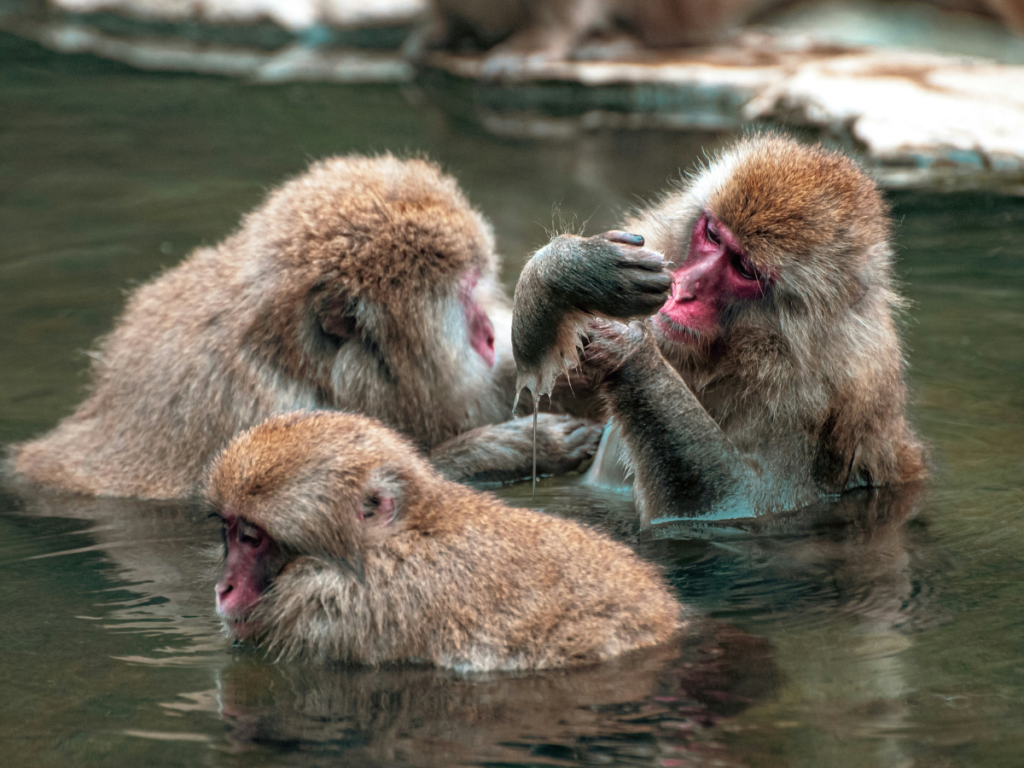
Years later, scientists and skeptics dismissed Watson’s claims of a “100th Monkey” phenomenon, asserting there was no sudden noospheric download of knowledge across the ocean. They acknowledged that monkeys on neighboring islands did eventually start washing potatoes, but attributed this to individuals swimming between islands or independent groups discovering the skill on their own.
Yet, I believe Watson’s underlying concepts retain value, especially if one considers quantum entanglement as a viable framework for non-local information transfer.
While my anthropological heart and brain love a great myth, what fascinates me is what this metaphor reveals about how our work, our voices, and our creations might be the tipping point for something extraordinary.
Slowly, and Then All at Once
Whether literal or symbolic, the story resonates because it mirrors something many of us experience. Change often comes slowly—until it doesn’t.
In his bestselling book, The Tipping Point, author Malcolm Gladwell explains how small actions by just a few individuals can create a massive social cascade.
“The tipping point,” he writes, “is that magic moment when an idea, trend, or social behavior crosses a threshold, tips, and spreads like wildfire.” Gladwell argues that three types of people catalyze this momentum: Connectors, Mavens, and Salesmen—those who bridge networks, share knowledge, and persuade others.
But none of their efforts work without the groundwork laid by persistent, passionate individuals (people like you) who dare to start something new long before the world is ready.
Change can happen the way author John Green described falling in love in The Fault in Our Stars—much like the way we fall asleep: “slowly, and then all at once.”
As an entrepreneur, artist, or creative thinker, you may sometimes feel like your efforts are akin to whispering in a roaring tempest. You are building something new. You are questioning norms, taking risks, and choosing meaning over comfort. Some days, our impact feels invisible.
But what if our work is laying the final stone in a foundation for transformation?
5 Lessons from the 100th Monkey
Here is what the “100th Monkey” metaphor can teach us:
1) Every action contributes to the tipping point. Our ideas, our offerings, and our art matter. We may never know which social post, product launch, or project will light the match. But without our consistently showing up, momentum doesn’t build. Every ripple counts.
2) Change may be closer than it appears. Just because change isn’t visible does not mean it isn’t happening. Underground, roots are growing. Conversations are shifting. The culture is warming to the new story you are telling. Keep going. The tipping point often arrives after the point of maximum doubt.
3) We are not alone. Sometimes it feels like we are the only one who sees the world the way we do. But chances are, there are others on distant islands—other entrepreneurs, artists, and rebels—washing their proverbial sweet potatoes, too. When enough of us act in alignment, a new reality takes shape.
4) Our courage is contagious. By daring to innovate, we give silent permission for others to do the same. Movements begin not with millions, but with a few brave souls who decide that business or life as usual is no longer acceptable.
5) Independent minds may naturally arrive at the same truths. When the cultural conditions are ripe, global innovators will build the tools the future requires. Our breakthrough is part of a larger global awakening.
How Can You Change the World? Start With This Journaling Prompt
Take a few minutes to explore the following questions and write your answers in your journal:
- What idea, dream, or piece of work have I been starting and stopping because I cannot yet see its impact?
- If I trusted that every small act contributes to a greater tipping point, what would I create, share, or begin today?
Whether we are designing software, painting canvases, scaling a coaching business, writing our first book, or building a visionary team, remember this: We do not need to wait for a quantum miracle to change the world.
Our daily, unseen efforts are already stacking weight on the scale. When that final ounce drops, the balance shifts forever.
Keep creating.
The world is one bold move away from a groundswell of transformation, and you might be the one who triggers it.